

Cutting Workers Cuts Consumers

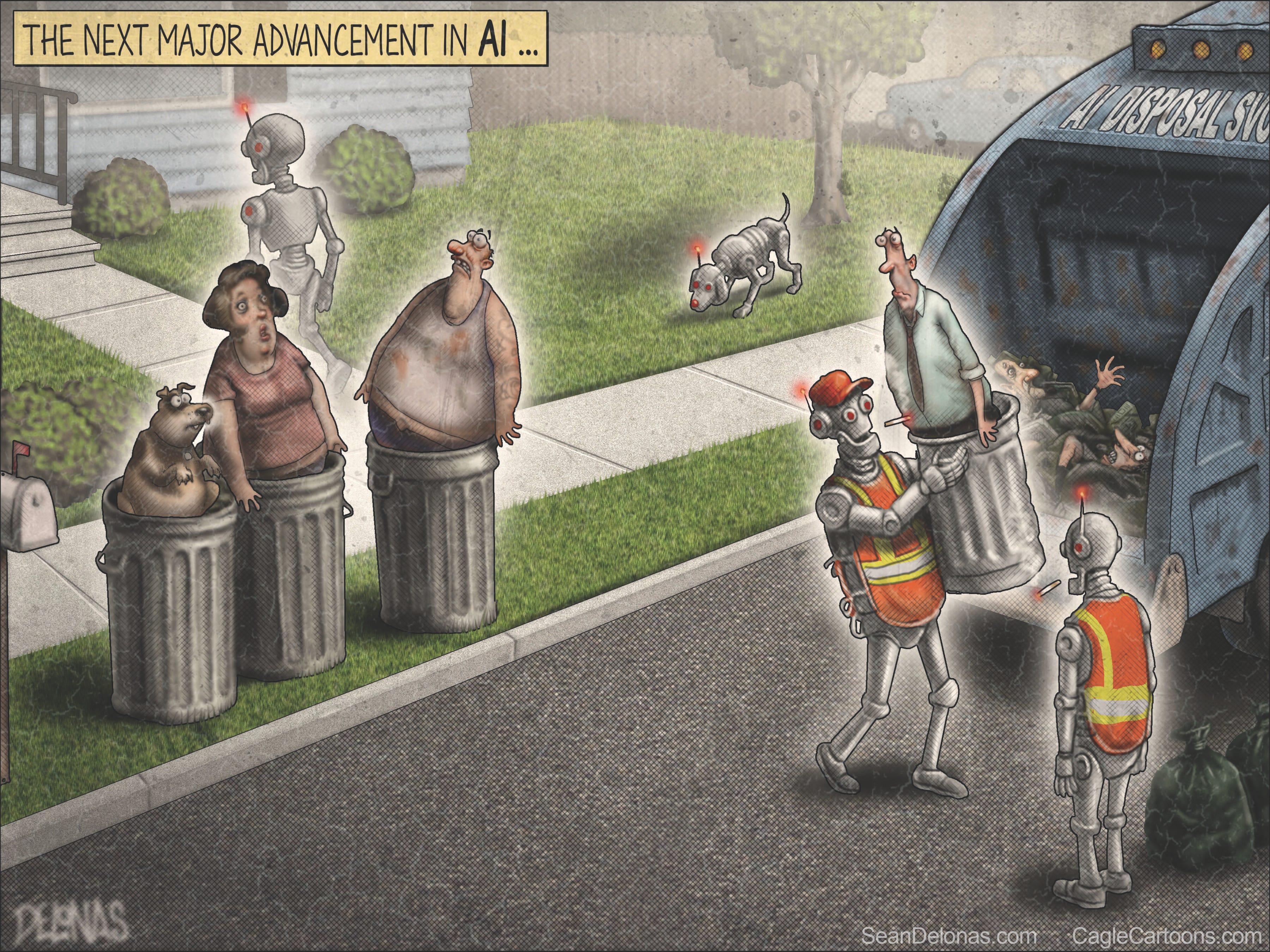
The last week of May saw calls for regulating artificial intelligence and its impact on humanity coming from widely varying sources. And the gist of the arguments can be traced back more than 100 years to two equally disparate characters.
Early in the week, Jake Johnson of Common Dreams reported that “two leading progressives in the U.S. Congress are calling for a tax on artificial intelligence to fund programs that would help prevent an economic catastrophe for workers displaced by the rapidly advancing technology.”
Democrats Sen. Elizabeth Warren of Massachusetts and Rep. Greg Casar of Texas, according to Johnson, “warned that AI risks turbocharging existing wealth and income inequality by driving up the fortunes of large companies and their executives while hurling millions of workers into joblessness without an adequate safety net.”
Far from Foggy Bottom, Pope Leo XIV published a 42,000-page encyclical, Magnifica Humanitas, that also called for regulations to protect the majority of humanity since “small but highly influential groups can shape information and consumption patterns, influence democratic processes, and steer economic dynamics to their own advantage, undermining social justice and solidarity among peoples.”
Warren shared the Pope’s fear of a moneyed, powerful elite in an op-ed for Time, adding:
“If AI transforms the future of work, we’ll need to invest in free education and apprenticeships and a new jobs guarantee so that all Americans have good-paying work. And while workers get back on their feet, we’ll need the revenue to bolster unemployment insurance to keep families afloat. The only way we can get there is by overhauling our tax code.”
Posting on X, Casar claimed “AI billionaires are threatening layoffs so big we hit Great Depression levels of unemployment. You don’t have to take my word for it. They say it.”
And if [when?] that happens, Leo warned of “a society that guarantees employment to only a small fraction of the population, despite having a high level of technical development, risks exposing many to forced inactivity, a lack of responsibility, and the absence of daily tasks and stimuli, resulting in human and cultural impoverishment. This creates a paradox of material progress and anthropological regression that undermines the foundations of a just and stable social peace.”
Such a situation also undermines the capitalistic concept of a consumer society. People have to work in order to buy things. AI can make all the widgets in the world, but folks need to have some coin before they can buy them.
No jobs … no money … no consuming.
That was the guiding principle that made the middle American 20th century the most prosperous era in our history. And if legislators and a Pope are strange allies, consider that both Henry Ford and John Dewey recognized the value of that system.
Writing for Barron’s on May 20, Kenneth G. Pringle cited “Ford’s ‘Five-Dollar Day [which] established ‘Fordism,’ a philosophy of high wages and benefits that fueled a 20th-century consumer revolution.”
What an idea! Pay your auto workers enough – $5 a day was a high wage at the time – and they might buy the cars they produce. It was as an economic revolution as significant as the assembly line.
Actually saying that such fair wages were an element of social justice, Ford also said, “Believing, as we do, that a division of our earnings between capital and labor is unequal, we have sought a plan of relief suitable for our business.”
Conservatives of the time called Dewey a communist [he was not] but “today [1935] any liberalism which is not also radicalism is irrelevant and doomed” definitely puts him to the left of Ford.
In Individualism Old and New [1929], Dewey observed, “The corresponding change in the ruling conceptions of the older economic theory is, of course, the obligation upon employers to pay high wages. Growing consumption through increased expenditure that affects a still greater amount of production cannot be maintained unless consumers have the wherewithal. The consumption demand of the well-to-do is limited; and their number is limited.”
According to Pringle, this Fordism that created the prosperous American Middle Class began losing its influence in the 1970s as offshoring work emerged.
The lower wages in third world countries cut production costs. Increasing profits at the expense of discarded workers was a hallmark of Reaganomics.
Joining the attack on workers, corporate raiders [sometimes inside operators], sold all assets not nailed down – and then the buildings. In that atmosphere, the workers producing the widgets were regarded as expense centers until the companies found they had nothing left to sell.
We see the updated version of this company-killing cannibalism in private equity companies.
Thus, we arrive at today’s “gig economy,” where people works as many gigs [without benefits] as they can handle in order to make ends meet.
Economists call this overt class war a “K-shaped” economy, meaning one of tremendous inequities, a few have-a-lots and many have-nots – a long way from Dewey’s “‘new economy’ based on the idea of the identity of high wages with industrial prosperity.”
The blitzkrieg invasion of AI into the workplace will only exacerbate a situation that has been deteriorating for 50 years. Progressive politicians and the Pope agree. Pringle wonders if someone might arrive with a new paradigm.
Profiteers and their pawns do not care. They have theirs and the political clout to keep it – until there are no chickens left to pluck.
 | A guest post by
|